From the blog
Seasonal Gutter Maintenance Checklist for Nashville-Area Homeowners
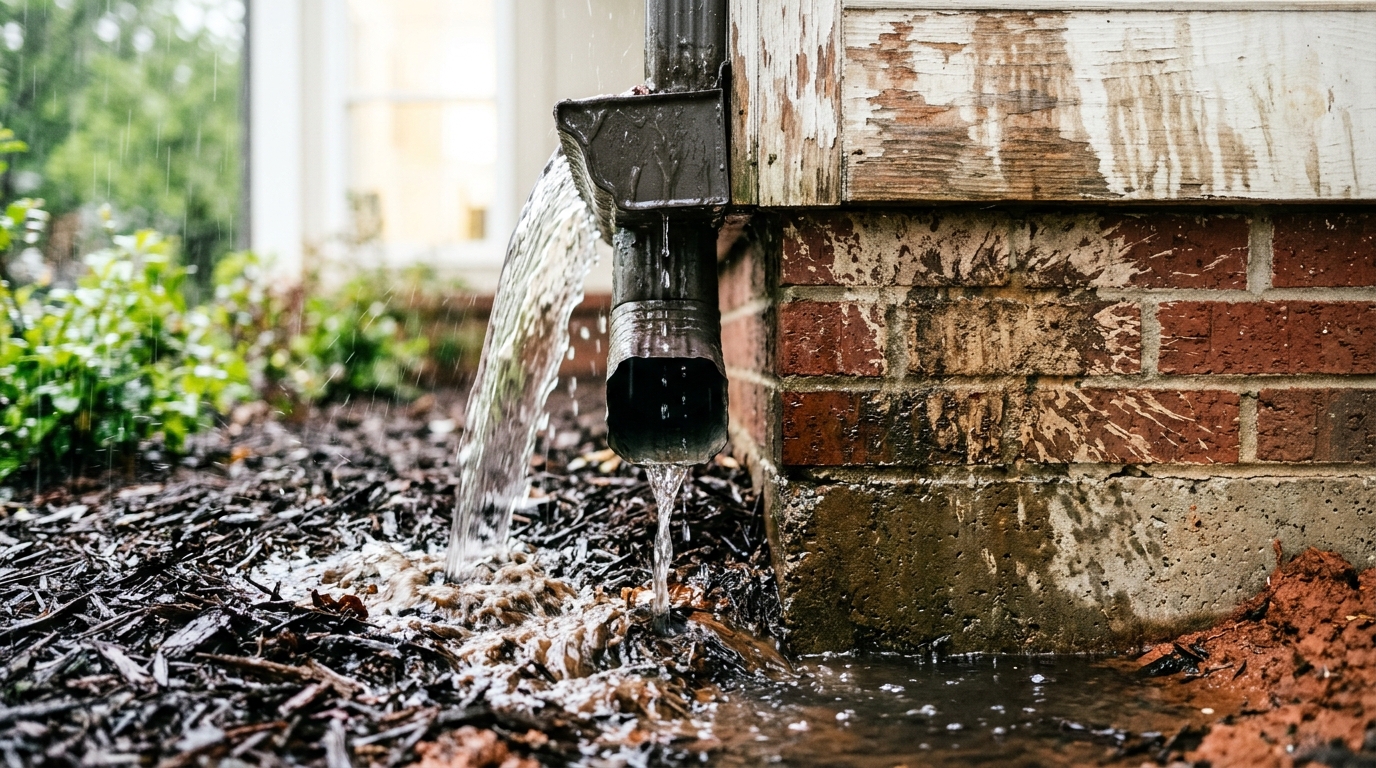
Nashville-area homeowners should clean gutters at least twice a year, in late spring (May) and late fall (after leaf drop, typically mid-November to early December), and add a third cleaning if the yard has oaks, maples, or sweetgum trees. Clogged gutters cause roof edge rot, fascia failure, and foundation water problems, so a consistent schedule protects the whole home, not just the gutter line.
Why Gutter Maintenance in Middle Tennessee Matters for Your Roof
Middle Tennessee averages roughly 55 inches of rain a year, more than Seattle, and much of it arrives in heavy bursts during spring thunderstorms. A standard 5-inch K-style gutter carries only so much volume. When debris blocks the downspout, water backs up and has nowhere to go but under the shingles and behind the gutter.
Here is how a clogged gutter damages a roof system, in order:
- Water backs up under the first shingle course. Water pooling at the eave soaks the drip edge, underlayment, and roof decking. Decking rot at the eave often needs replacement of 2–4 feet of plywood along the edge.
- Fascia boards absorb moisture. Constant overflow soaks the wood behind the gutter. Soft, discolored, or paint-peeling fascia means water has been present for months.
- Soffit and attic intrusion. Wet fascia lets moisture reach soffit vents, insulation, and rafter tails, which invites mold and pest entry.
- Foundation saturation. Overflow lands directly beside the foundation. Middle Tennessee clay soil holds water, and saturated clay pushes against basement and crawl space walls.
- Ice and weight stress. Standing water in a gutter freezes during January and February cold snaps. Ice expands the seams and pulls the gutter away from the fascia.
Roofing manufacturers also tie warranty performance to proper drainage. Water that repeatedly sits against the roof edge can fall outside normal wear, which complicates both warranty and insurance claims.
Gutter Cleaning Schedule for Nashville: Season by Season
Nashville's climate runs on four distinct stresses: spring storms, summer heat and humidity, heavy autumn leaf fall, and winter freeze cycles. Match your maintenance to each.
Spring (March–May): Post-Winter Inspection and Cleaning
- Remove winter debris, seed pods, and the sediment that builds up as shingle granules wash down.
- Flush each downspout with a hose. If water exits slowly, clear the clog from the bottom up.
- Check that gutter slope is correct: about 1/4 inch of drop per 10 feet toward the downspout.
- Look for sagging sections, loose hangers, and separated seams. Hidden hangers should be spaced every 24–36 inches.
- Inspect the roof edge for bent drip edge and lifted shingle tabs from winter wind.
- Confirm downspout extensions discharge at least 4–6 feet from the foundation.
Summer (June–August): Storm Readiness
- Trim branches back at least 6 feet from the roofline. Branches drop debris and give squirrels access to the roof edge.
- Check caulk at end caps and inside corners. Summer heat causes sealant to shrink and crack.
- After any severe thunderstorm, walk the perimeter and look for overflow stains, bent sections, or downspouts knocked loose.
- Look for granules in the gutters. Heavy accumulation signals shingle aging and may warrant a roof inspection.
Fall (October–December): The Critical Cleaning
This is the most important cleaning of the year. Wait until most leaves have dropped, typically the last week of November in Nashville, Franklin, and Brentwood. Cleaning too early means doing it twice. If you have oaks, schedule a second pass in mid-December because oak leaves fall late.
- Scoop out all debris by hand or with a gutter scoop, then flush with a hose.
- Bag wet leaves instead of dumping them beside the house, where they attract moisture and pests.
- Test every downspout and underground drain line for free flow.
- Seal any seam that leaks before freezing weather arrives.
Winter (January–February): Monitor and Respond
- Check gutters after freezing rain for ice dams or sagging.
- Clear downspout outlets of ice so meltwater can drain.
- Never chip ice from gutters with a hammer or metal tool. It dents aluminum and breaks seams.
Gutter Maintenance Checklist by Frequency
| Task | Frequency | What It Protects |
|---|---|---|
| Remove debris from gutters | 2–3 times per year | Roof edge, fascia |
| Flush downspouts | Twice per year | Foundation, landscaping |
| Trim overhanging branches | Annually | Shingles, gutters |
| Check hangers and slope | Annually | Gutter alignment, fascia |
| Inspect seams and end caps | Annually | Leak prevention |
| Verify downspout extensions | Twice per year | Foundation, crawl space |
| Post-storm walkaround | After every severe storm | Insurance documentation |
Warning Signs of Gutter-Related Damage
Catch these early and repairs stay small:
- Water streaming over the front edge during rain. The gutter is clogged, undersized, or pitched wrong.
- Vertical streaks on siding below the gutter. Overflow is running down the wall.
- Peeling paint or soft spots on fascia. Moisture has already reached the wood.
- Gutters pulling away from the house. Hangers or fascia have failed from weight and water.
- Plants or seedlings growing in the gutter. Debris has been sitting long enough to become soil.
- Pooled water or erosion near the foundation. Downspouts are discharging too close.
- Mildew, stains, or damp insulation in the attic near the eaves. Water has traveled past the roof edge.
Gutter Guards vs. Open Gutters: Trade-Offs
Gutter guards reduce cleaning frequency but do not eliminate it. Here is how the options compare:
| Option | Best For | Limitation |
|---|---|---|
| Open gutters | Homes with few trees | Needs 2–3 cleanings yearly |
| Mesh screens | Large leaves, light debris | Pine needles and shingle grit pass through or sit on top |
| Micro-mesh guards | Heavy tree cover | Costs more, still needs annual surface cleaning |
| Reverse-curve guards | Moderate debris | Can overshoot in heavy storm runoff |
Choose guards based on your tree species and roof pitch. Low-slope sections and valleys that dump large water volumes can overshoot some guard styles, so installation details matter.
Why Seamless Gutters Reduce Maintenance
Sectional gutters have a seam every 10 feet, and each seam is a failure point that leaks and collects debris. Seamless aluminum gutters are formed on-site from a single coil to the exact length of each run, which leaves seams only at corners and downspout outlets. Fewer seams mean fewer leaks and less caulk maintenance. For Middle Tennessee storms, upgrading to 6-inch seamless gutters with 3x4 inch downspouts increases capacity by roughly 40 percent over standard 5-inch systems, which is worth considering for homes with large roof planes or steep pitches.
When to Call a Professional
Hire a roofer or gutter specialist when the work involves ladders above one story, steep roofs, or visible damage. Call a professional if you find:
- Soft or rotted fascia or decking at the eave
- Gutters that sag even after cleaning
- Repeated overflow despite clear gutters (a sign of undersizing)
- Granule loss, curling, or missing shingles near the edge
- Storm damage you plan to report to your insurer
A drone roof inspection documents the roof edge, gutters, and fascia without anyone climbing the roof, which gives you photo evidence for insurance claims after hail or wind events.
Gutter Maintenance FAQ for Middle Tennessee Homeowners
How often should I clean gutters in Nashville?
Clean gutters twice a year, in late spring and after leaf drop in late fall. Homes surrounded by oak, maple, sweetgum, or pine trees need a third cleaning, usually in early fall or mid-December.
Can clogged gutters really damage my roof?
Yes. Clogged gutters force water under the lower shingle courses and into the decking, fascia, and soffit. Eave rot is one of the most common gutter-related roof repairs in Middle Tennessee.
Do gutter guards eliminate cleaning?
No. Guards reduce cleaning frequency, but pollen, shingle grit, and fine debris still collect on or under them. Plan on at least one annual inspection and surface cleaning.
How far should downspouts discharge from the foundation?
Downspouts should discharge 4–6 feet from the foundation, onto ground that slopes away from the house. Shorter distances let water seep back toward basement walls and crawl spaces.
Does homeowners insurance cover gutter damage?
Insurance typically covers gutters damaged by a covered peril such as hail, wind, or a fallen tree. It generally does not cover damage from neglected maintenance, so keep dated cleaning records and photos of your gutters before and after storms.
